The Seasonal Bit
Most houses in the Waldorf service area went up between 1962 and 2007, with the median build year landing around 1982. That puts a lot of original garage doors somewhere past their forty-year mark right now, and doors don't fail on a convenient schedule - they fail when a spring finally gives out on the coldest morning of the year.
If your door is from that original build era, the smart move is to replace it before the hard cold sets in, not during it. A torsion spring under tension behaves differently at 20 degrees than it does at 60, and panels that have warped slightly over four decades don't seat the same way once the temperature drops.
One honest limit here: we don't recommend installing a new door in the middle of a hard freeze. Weatherstripping and bottom seals need to cure and set properly, and rushing that in a cold snap just means redoing it in spring. If your door is on its way out, plan the swap for a stretch of milder weather rather than waiting for a total failure in January.
What the Weather Here Does to It
Waldorf sits in a cold-severe climate band. That matters more for a garage door than most people think, because the door is usually the largest moving, sealing surface on the house, and it's rarely insulated as well as the walls around it.
In a climate band like this, steel panels contract in winter and expand again in summer, which over years works bolts and hinges loose and puts uneven stress on torsion springs. On houses built in the 1980s and 90s wave that makes up most of this area's stock, that's original hardware doing decades of that cycle with no upgrade.
Condensation is the other piece. An uninsulated door in a cold-severe zone sweats on the inside face when the garage holds any heat at all - from a water heater, a parked car, or just the house itself. That moisture finds the bottom corners of the panel first, and that's usually where you'll see rust bubbling through old steel before anywhere else.
None of this means your door is doomed. It means the climate here is actively working on the door's hardware and seals every winter, whether the door gets used once a day or ten times, and that's the baseline any replacement decision should start from.
What to Look At First
Start with the build era. Housing across this service area runs 1962 to 2007, median 1982, and that holds true whether you're closer to La Plata or out toward Bryantown - the 33 named areas in this territory are mostly 1980s and 90s construction. If your house falls in that window and the door has never been replaced, you're likely looking at the original unit.
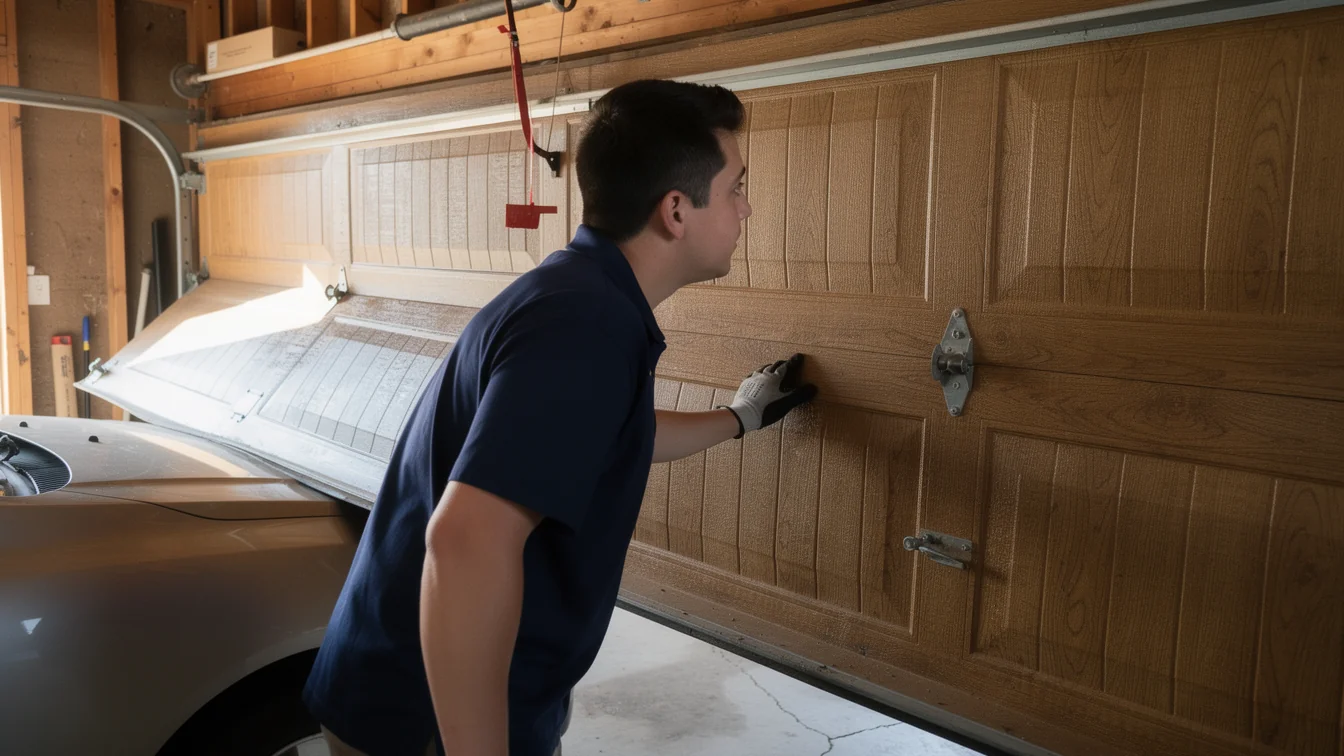
Check the panel material first. A lot of doors from that era are plain steel with no insulation layer, which in a cold-severe climate means more condensation and more flex. Press on a lower panel - if it gives more than it should, rust has probably thinned the steel from the inside.
Next, the springs and cables. Original torsion springs on a 30-to-40-year-old door have likely been cycled tens of thousands of times. If you see stretched coils or flat spots, that's wear, not a cosmetic issue.
Last, the opener. If it predates safety-reversal sensors required on newer units, that alone is worth a conversation before you spend money on just the door.
What Is Going On
The service area covers 109,568 households, with 59,424 of those owner-occupied houses - the ones that actually have a garage and a door to maintain or replace. Median household income across the area runs $115,562, which puts most homeowners here in a position to choose a mid-tier insulated door rather than stretching for the cheapest option or the top of the line.
That matters because the decision isn't really about budget ceiling, it's about matching the door to the house. A lot of the stock here is 1980s and 90s build, which means standard-width openings and conventional torsion hardware - not the wide, heavy doors you'd see on newer construction. That keeps replacement straightforward in most cases.
Where it gets complicated is houses that have had one or two non-original doors installed over the years, sometimes with mismatched track or hardware from a repair rather than a full replacement. If that's your situation, the first visit is about figuring out what's actually there before anyone talks about what goes in next.
Talk to a local pro
Garage door trouble in Waldorf?
Same-day service with honest, upfront quotes.