The Seasonal Bit
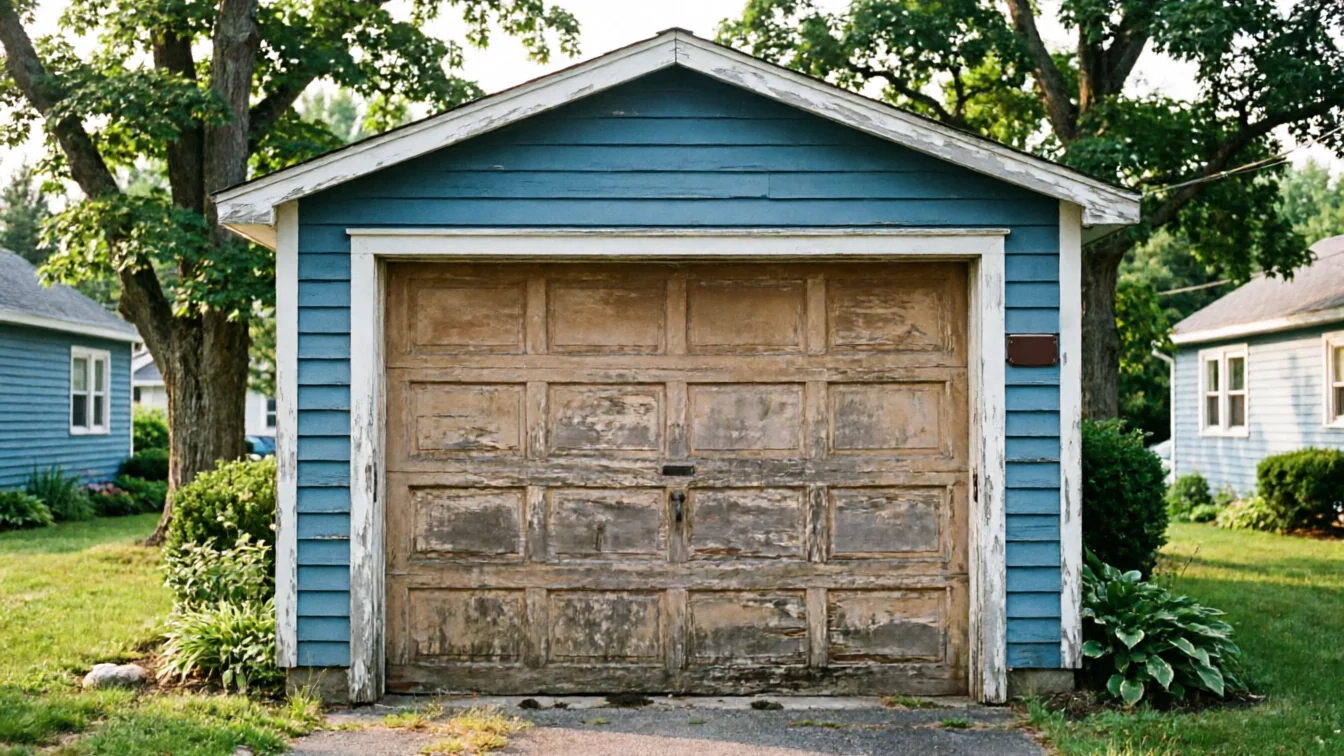
Most of the houses we work on around Waldorf went up somewhere between 1962 and 2007, with the bulk of that stock dating to the 1980s and 90s. That matters because the weather seals and draughts that came standard on a garage door built in 1985 were never rated for the kind of temperature swings this area sees every winter. A door that sealed fine when it was new is a different animal thirty or forty years later, after the rubber has hardened and the track alignment has drifted a sixteenth of an inch at a time. Fall is when we see the first calls - not because anything broke overnight, but because the gap at the bottom of the door that nobody noticed in July suddenly lets in a cold draft every time the furnace kicks on. If your door was installed anywhere near the median build year for this area, assume the seal is original or close to it, unless someone's already replaced it. That's the starting point before anything else gets checked.
We're not going to tell you every door needs a full teardown twice a year. Most don't. But a five-minute look before the cold really sets in catches the cheap fix before it becomes the expensive one.
What the Weather Here Does to It
Waldorf sits in a cold-severe climate band, which means the garage door hardware on a 1980s or 90s house has gone through decades of freeze-thaw cycling on the torsion spring and the track bolts. Steel contracts in the cold. On an older door, that contraction shows up as a spring that feels heavier to lift on the first cold morning of the year, or a track that's worked a fastener loose just enough to let the roller chatter. None of that is dramatic. It's slow, and it's cumulative, and it's exactly the kind of wear that shows up fastest on doors from the housing stock that's common here - built well before today's weatherproofing standards, sealed with materials that were decent for their era but not built to last fifty winters.
The bottom seal and the weather seals and draughts around the perimeter are the first casualties. Rubber that's been through this many cold-severe seasons loses flexibility before it visibly cracks. You'll feel it as a cold floor near the door before you ever see a gap.
What to Look At First
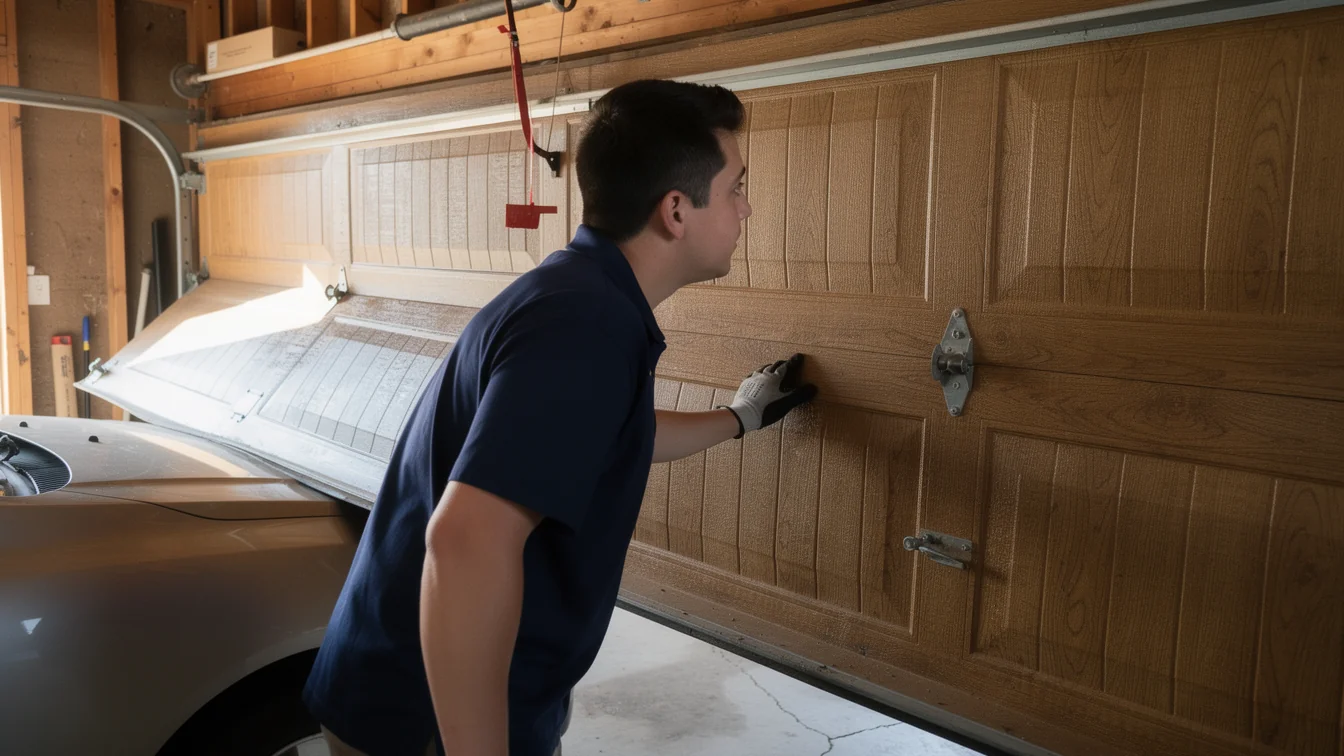
Start at the bottom seal. If it's flat on one side or doesn't spring back when you press it, it's done its job and it's finished. Next, run a hand along the weather stripping on the side jambs - if it's stiff instead of pliable, that's the cold-severe climate talking, not a manufacturing defect. Check where light comes through at the top corners; on houses from the 1980s-90s stock that makes up most of the area, the header seal is often the original piece and the first to go.
After that, look at the spring. A torsion spring that's visibly stretched, or that makes the door feel unbalanced when you lift it by hand with the opener disconnected, is a job for a call, not a fix with hardware-store parts. We won't tell you to replace a spring you can't see sagging just because the door is old - a door from this era with a spring that's still cycling smoothly doesn't need to be touched yet. Replacing good parts early is money spent for nothing.
What Is Going On
Across the service area - 109,568 households, with 59,424 of those in owner-occupied houses - the garage door calls we get this time of year cluster around the same handful of issues: hardened seals, stiff springs, and tracks that have drifted out of square after years of seasonal expansion and contraction. That's not a coincidence. It's what happens when a housing stock built mostly in the 1962-2007 window sits through decades of a cold-severe climate without the door hardware ever being swapped out.
We work this area out to La Plata, Brandywine, Bryantown, and the towns further out toward Accokeek and Pomfret, and the pattern holds pretty consistently - the older the door, the more the cold exposes what time has already loosened. One honest limitation: if your seal has hardened past the point of flexing back, no amount of adjustment fixes it. That's a replacement part, not a tune-up, and pretending otherwise just means you're back here again next winter.
Talk to a local pro
Garage door trouble in Waldorf?
Same-day service with honest, upfront quotes.