The Seasonal Bit
Waldorf's housing stock runs 1962 to 2007, with the median build year sitting at 1982, and most of what we work on across the 33 named areas we cover falls into that 1980s-to-90s window. That matters for a seasonal reason: a door and opener installed when a house was built in, say, 1985 is now pushing forty years old, and the parts on it were never built for a forty-year service life. Spring steel fatigues. Nylon rollers crack. Opener gear sets strip. None of that shows up as a sudden failure - it shows up as a door that's gotten louder, slower, and harder to trust, season after season, until one cold morning it just doesn't go.
We see the pattern every year: calls climb right as the weather turns, not because doors break more in the cold, but because a door that was already tired gets pushed past its limit the first hard freeze. If your door is from that same era as most of the neighborhood, this is the stretch where small problems turn into a no-go morning.
What the Weather Here Does to It
This area sits in a cold-severe climate band, and that has a direct effect on a door that's 20 to 40 years old. Torsion springs lose tension as the steel contracts in low temperatures, and a spring that was already near the end of its cycle count will often let go on the first genuinely cold stretch, not in July. Lubricant on older rollers and hinges thickens up the same way, which is why a door that sounded fine in September can sound like it's dragging a chain by January.
On the 1980s and 90s builds especially, the weatherstripping at the bottom panel has usually hardened and shrunk, which lets cold air track straight into the garage - a bigger deal here than in a mild climate, because the temperature swing the door assembly goes through each winter is wider. That swing is what fatigues metal parts faster than age alone would. We're not going to tell you a door failure is weather's fault in the moment; it's almost always weather finishing off a part that was already near its limit.
What to Look At First
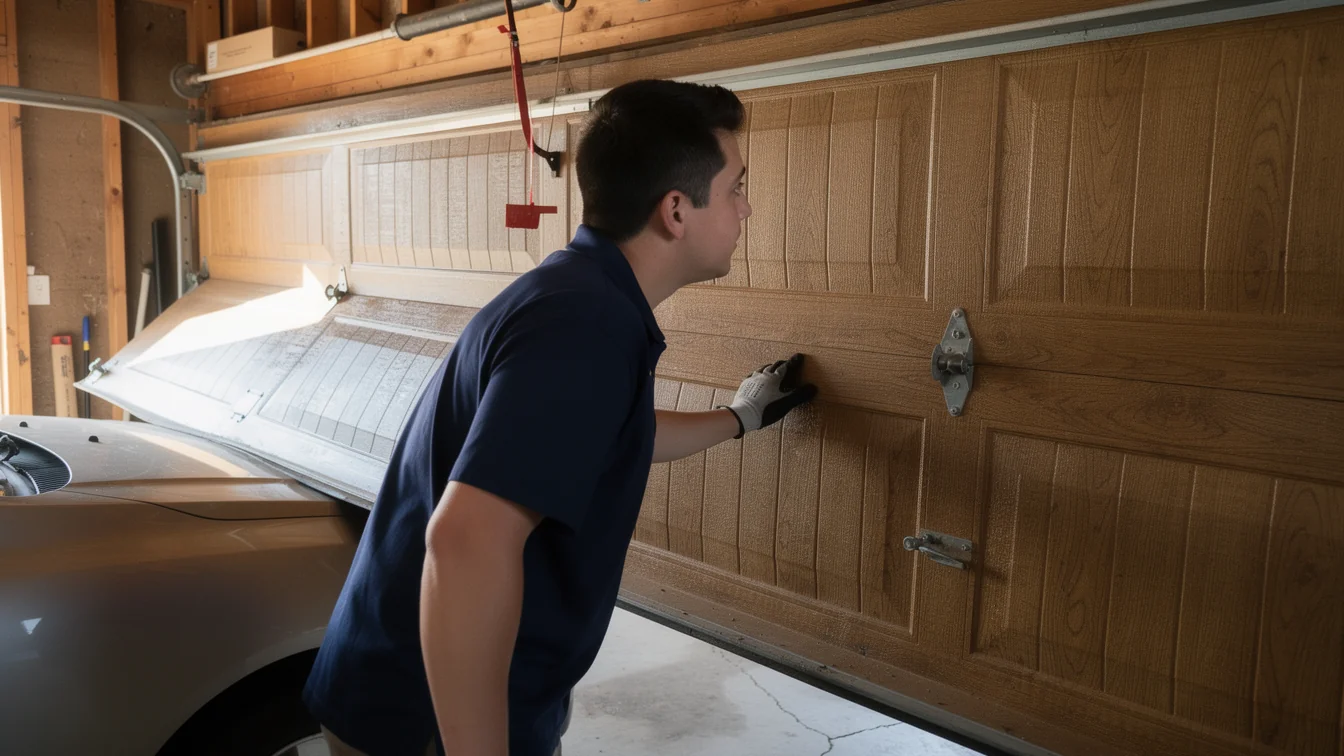
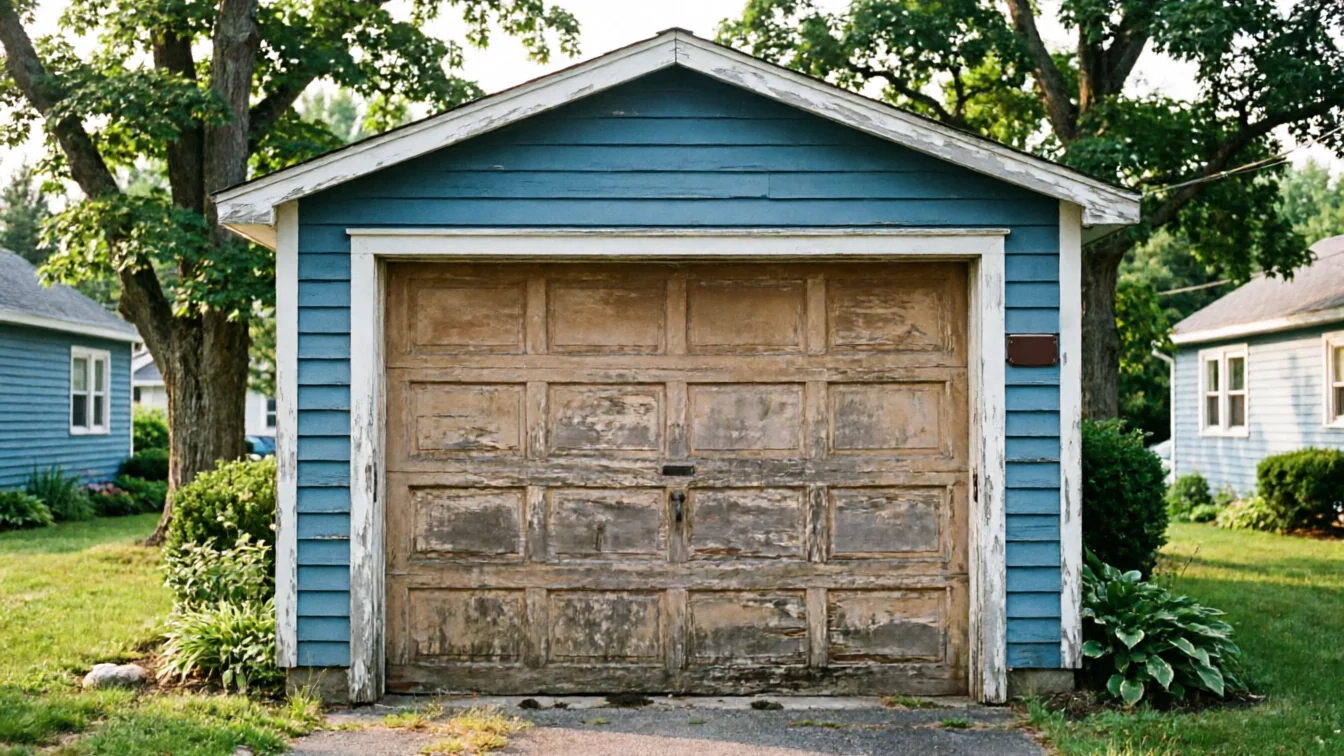
Before you decide whether to fix or replace, look at three things specific to a door from this era. First, the spring - if it's original to a house built in the 1980s or 90s, it has almost certainly outlived its rated cycle count already, and replacing just the spring on an otherwise sound door is usually worth it. Second, the opener - a lot of units from that build window are chain-drive models with worn gear kits, and a new logic board or gear set can be cheaper than a full swap if the rail and arm are still straight. Third, the panels themselves - steel panels from that period can usually be patched or have hardware replaced, but if they're wood or wood-composite, cold-weather moisture cycling over three or four decades tends to have done real damage at the bottom panel that paint won't fix.
With 59,424 owner-occupied houses in the service area, we see this same three-point check apply to a large share of the doors we're called out on. It's not a universal answer, but it's the right place to start the conversation before anyone talks about a new door.
What Is Going On
Here's the honest limitation: not every older door is worth saving, and we'll tell you that on-site rather than sell you a spring job on a door that's structurally done. If the panels are delaminating or the track is bent beyond adjustment, a repair is money spent on a door that still needs replacing in two years. Median household income in this service area is $115,562, and with 109,568 households across the area, we're working on a wide range of door ages and budgets - there's no single right call for all of them.
What we can say is that a door original to a house from the 1982 median build year is at the point where the math usually favors fixing the spring and opener rather than the whole unit, provided the panels and track are sound. Past that, once the frame or bottom section is compromised, patching it stops making sense and a full replacement is the more honest answer, even if it costs more up front.
Talk to a local pro
Garage door trouble in Waldorf?
Same-day service with honest, upfront quotes.