The Seasonal Bit
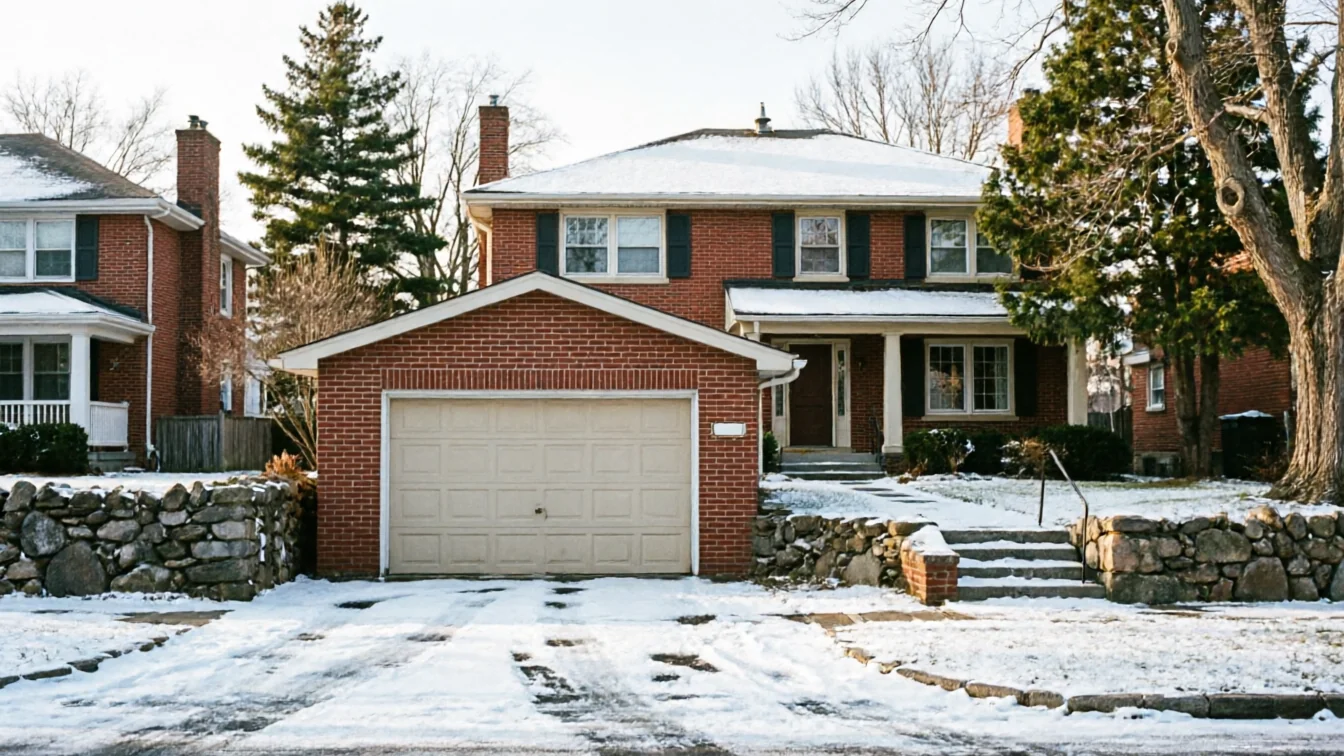
Most houses in and around Waldorf went up between 1962 and 2007, with the median landing around 1982. That means a huge share of the garage doors and openers on this side of the county are now decades past their install date, or at least running on hardware from that era. A door put in during the 1980s build-out was sized and sprung for the house it sits on, not for the opener upgrades or insulation retrofits homeowners have added since. When fall turns to winter here, that mismatch between original hardware and later add-ons is what shows up as a grinding opener or a spring that won't quite balance the door anymore. We see this pattern across the 33 named communities we work in, from La Plata to Upper Marlboro, because the building boom hit the whole area on roughly the same timeline, and the hardware is aging the same way at roughly the same rate.
What the Weather Here Does to It
This area sits in a cold-severe climate band, and that matters more for garage doors than people expect. Steel contracts in hard cold, which tightens tolerances on tracks and rollers that were already worn from decades of cycling. Torsion springs lose a little tension every time the temperature drops hard, and a spring that was already near the end of its rated cycle count in a 1980s-built door can snap on a cold morning instead of a mild one. We don't have exact low-temperature or snowfall figures to hand you here, so we won't pretend to. What we can say is that a door that's been fine all October can bind, groan, or drop a cable the first real cold snap of the season, and that's not a coincidence tied to one bad part - it's the climate doing what it does to aging hardware every year, on schedule, whether the homeowner notices the pattern or not.
What to Look At First
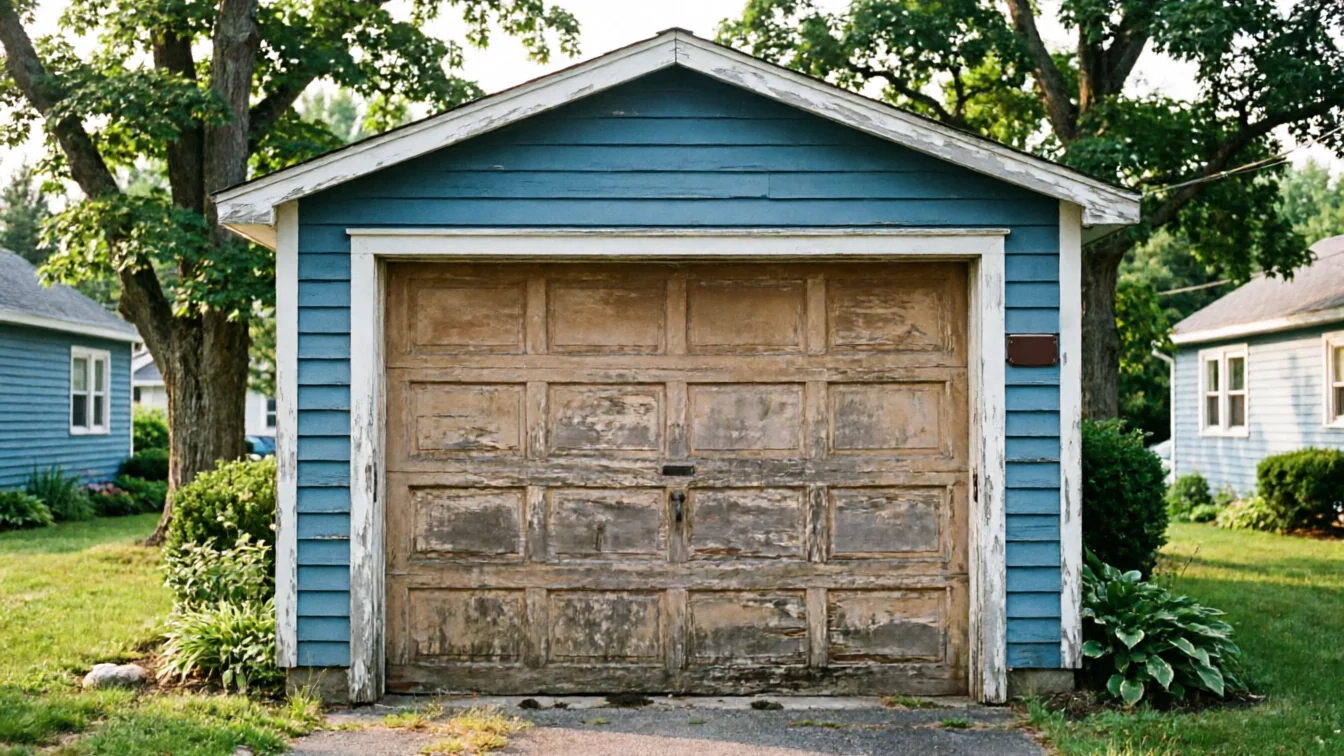
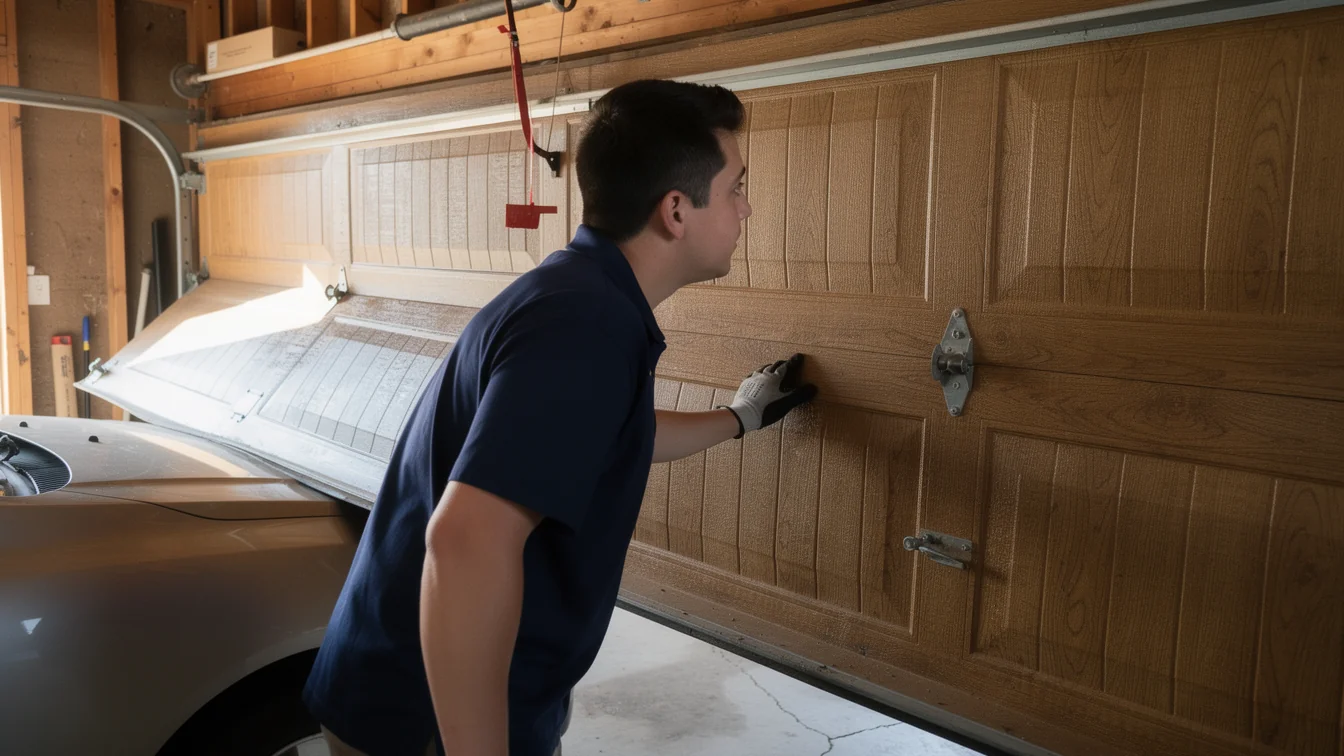
Start with the springs. Across the 1980s and 90s stock that makes up most of this area's housing, torsion springs were sized for the door weight at install, and insulation or panel upgrades added since can throw that balance off. Lift the door halfway by hand with the opener disconnected - if it doesn't hold, the spring is tired. Next check the panels themselves. A good number of doors on houses built before insulation rules tightened are still single-layer steel, which means they flex more in the cold and put extra strain on the hinges and the opener's gears trying to move them. Look at the bottom panel for rust or warping where moisture collects against a cold slab. Last, listen to the opener. A motor from the original build era straining to lift a door that's heavier than it was designed for is one of the most common calls we get in this area, and it's usually cheaper to fix the balance than to replace the opener outright.
What Is Going On
Across the service area - 109,568 households, with 59,424 of them in owner-occupied houses - median household income runs around $115,562, which tells you most of these homeowners can afford to fix a door right rather than patch it. That matters because a lot of what we find on calls here isn't one broken part, it's a door and opener system that was matched correctly in 1985 and has been drifting out of balance ever since, one small adjustment at a time. We work across La Plata, Brandywine, Bryantown, Accokeek, Pomfret, and the rest of the named areas nearby, and the pattern repeats: original hardware, later upgrades, a climate that doesn't forgive the gap between them. The honest answer for most of these calls is that replacement beats repair once a door is past its spring's rated cycles and still running an original-era opener - patching that combination just delays the same call a year or two.
Talk to a local pro
Garage door trouble in Waldorf?
Same-day service with honest, upfront quotes.