The Seasonal Bit
Waldorf's housing stock runs from 1962 through 2007, with the median starting point around 1982, spread across 33 named pockets that are mostly 1980s and 90s construction. That range matters more than people think, because the hardware and the steel gauge on a door changed a lot across those four decades. A tech walking up to a house built in the early 80s already has a short list of likely failure points before the door even opens, because that era of door shares the same torsion setup, the same bracket spacing, and often the same opener chassis as the house two streets over.
The seasonal part is this: cold weather doesn't cause most of these failures, it exposes ones that were already building. A spring that's been losing tension for two years finally gives out on the first hard-freeze morning, not because the cold broke it, but because cold steel is less forgiving of a weak coil. So late fall and winter calls in Waldorf skew toward the same handful of houses, and the same handful of parts, that this market has carried since the 80s building boom.
What the Weather Here Does to It
Waldorf sits in a cold, severe winter climate band, and that shows up in specific, boring ways on a garage door rather than dramatic ones. Steel contracts. Grease in an opener gearbox that's fifteen or twenty years old thickens enough to slow the carriage, and a slow carriage reads to the homeowner as 'the door is stuck' when it's really just cold grease fighting a motor that was never strong to begin with. Torsion springs lose a little tension in the cold too, which is why a door that closed fine in September suddenly won't latch right in January.
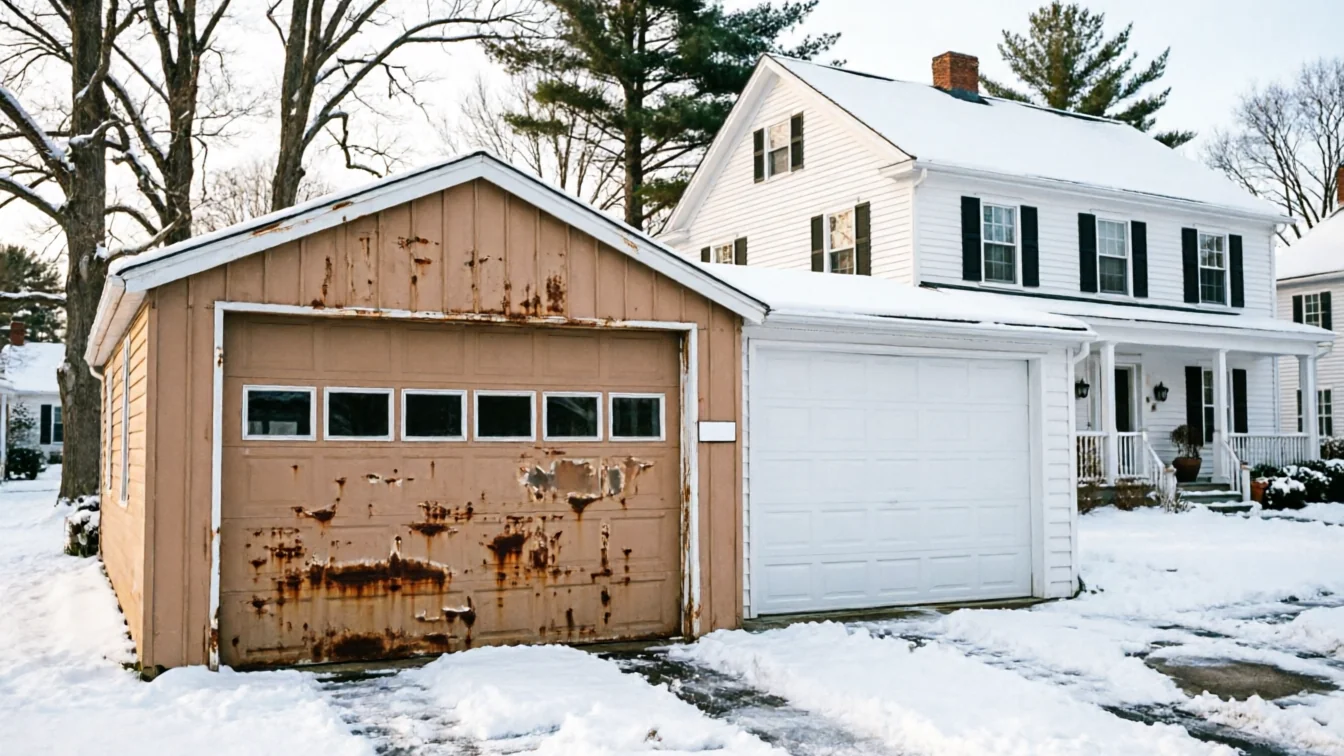
On houses from the 1962-2007 window, the weather stress lands hardest on original hardware that was already at the end of its service life. A door built in 1985 that still has its first spring is not a door that's been lucky, it's a door that's overdue. Cold is just the thing that finally asks the question. We also see panel seams on older steel doors tighten up in deep cold, which can make a slightly bent track bind where it wouldn't in July.
What to Look At First
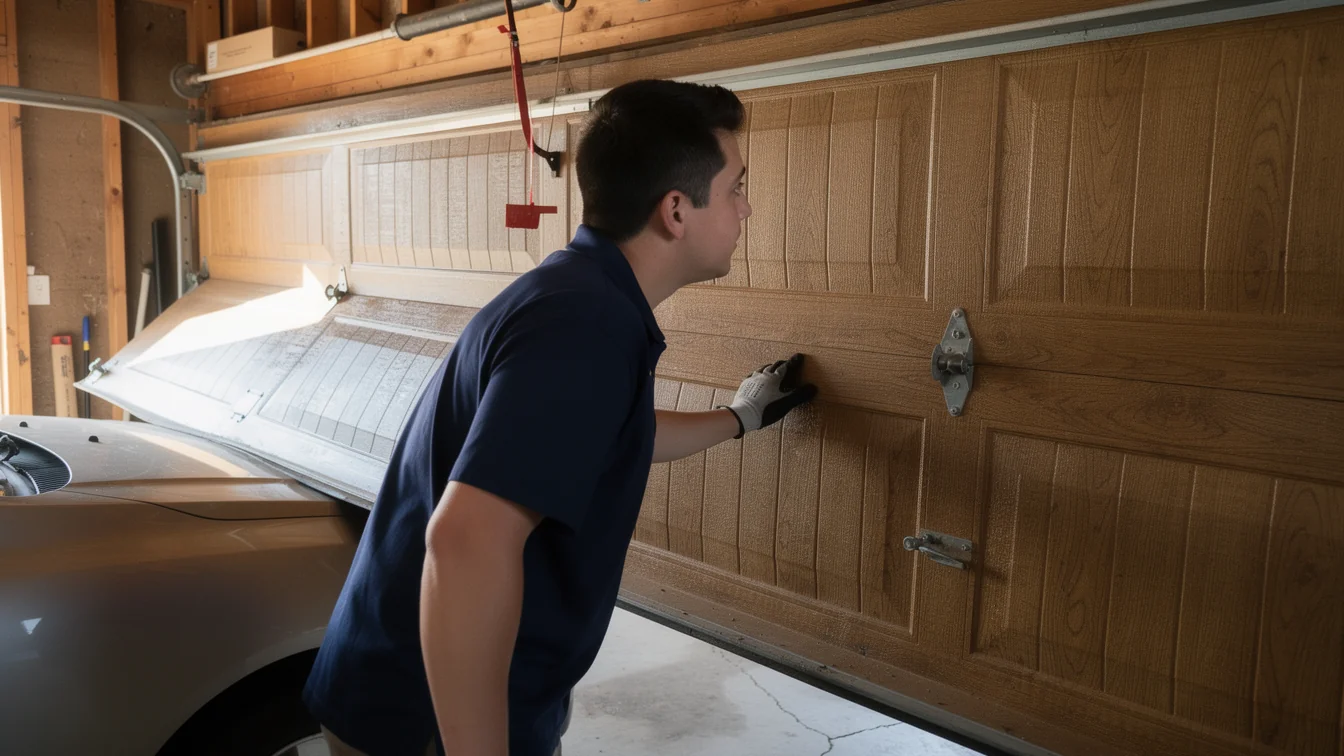
On a service call in Waldorf, the order is almost always the same: torsion spring tension first, because a weak spring puts load on everything downstream of it. Then the cables, checking for fraying near the drum, since cable wear accelerates once a spring is already under-tensioned and the opener is doing work it shouldn't. Then the rollers and track alignment, because houses in the 1980s and 90s pocket of this market were built with steel rollers as standard, and those wear a visible flat spot that tells you a lot in about ten seconds.
After that we check the bottom seal and the opener's force settings, in that order. A bad seal lets cold air move the wood or steel panel just enough to throw off the travel limits, which again reads as an opener problem when it's really a seal problem. We don't start with the opener circuit board. People expect us to, because it's the part with lights on it, but on a house from this era the mechanical hardware fails long before the electronics do.
What Is Going On
Put together, what's going on in most Waldorf houses is a predictable mismatch between hardware age and weather load. A door built near the median year of 1982 is now over four decades old if nothing's been replaced, and the cold severe winters here don't let that hardware coast the way it might in a milder climate. The fix usually isn't complicated, a spring, a set of rollers, sometimes a cable, but it has to be diagnosed in the right order or you end up replacing an opener that was never the problem.
Here's the honest limitation: on some of the older end of that 1962-2007 range, original torsion spring sizes and some wind-up drums aren't stock items anymore, and we sometimes have to order a specific size rather than pull one off the truck. That adds a day or two to a job that would otherwise be same-visit. We'd rather tell a homeowner that up front than promise a fix we can't deliver that afternoon.
Talk to a local pro
Garage door trouble in Waldorf?
Same-day service with honest, upfront quotes.