Off-the-shelf profile gaps
The harder cases are the doors built around the median year for this area, 1982, where the original panel profile isn't something a supplier keeps on a shelf.
Waldorf, MD
Dented or cracked garage door panels are common in Waldorf's 1960s-2000s housing stock. See how panel replacement works, what it costs, and what to expect.
Downtime
A panel job doesn't have to mean a day with the car stuck outside. If it's one panel on a sectional door and we can match the style, the door stays operable while we source the replacement - you can still open and close it, just with a dent or a crack staring back at you until the new piece goes in.
The harder cases are the doors built around the median year for this area, 1982, where the original panel profile isn't something a supplier keeps on a shelf.
Those jobs take longer because we're hunting down a matching skin or, more often, talking you through whether a full door makes more sense than chasing one obsolete panel. We won't quote a turnaround until we've looked at the door and the panel style, because a 1960s-era panel and a 2000s-era panel are not the same search.
What we can tell you up front: single-panel swaps on common styles move fast, discontinued styles don't, and we'll say so before you commit to a repair that might outlast its own parts supply.
Our process
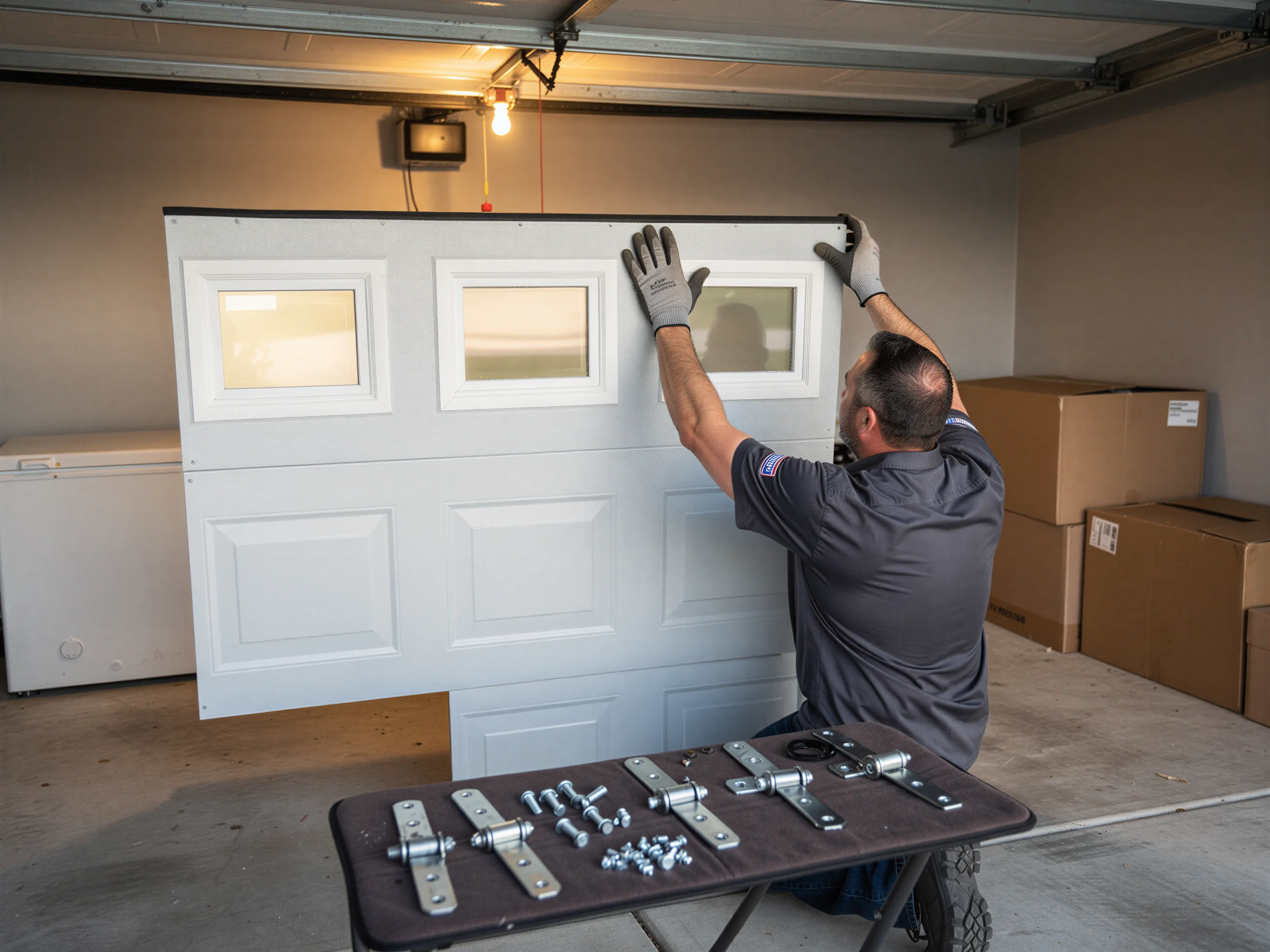
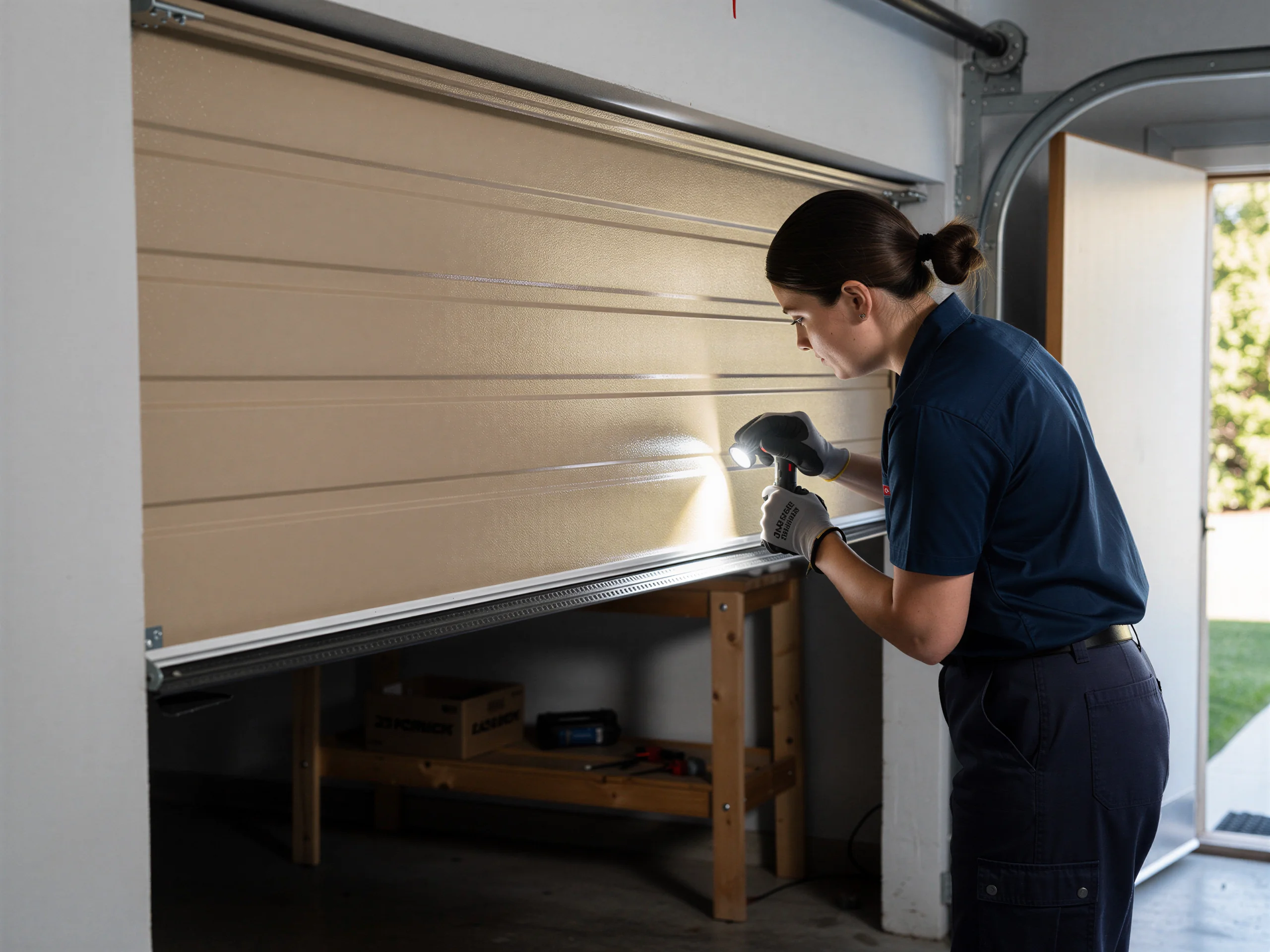
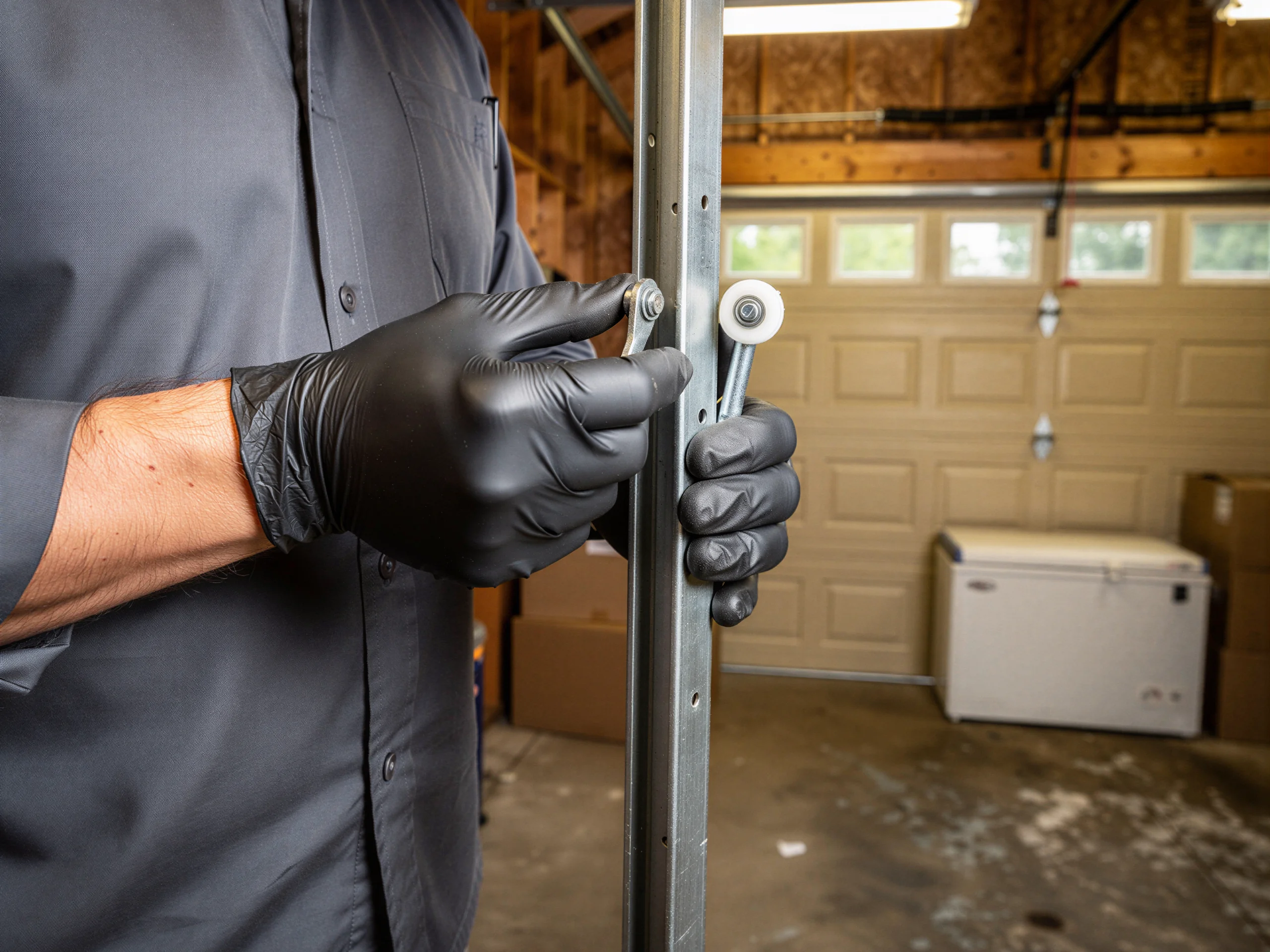
We start by pulling the damaged panel and checking the hinges, rollers, and track on either side of it - a bent panel often means the hardware around it took a hit too, and replacing the panel without checking that is how you end up calling us again in six months.
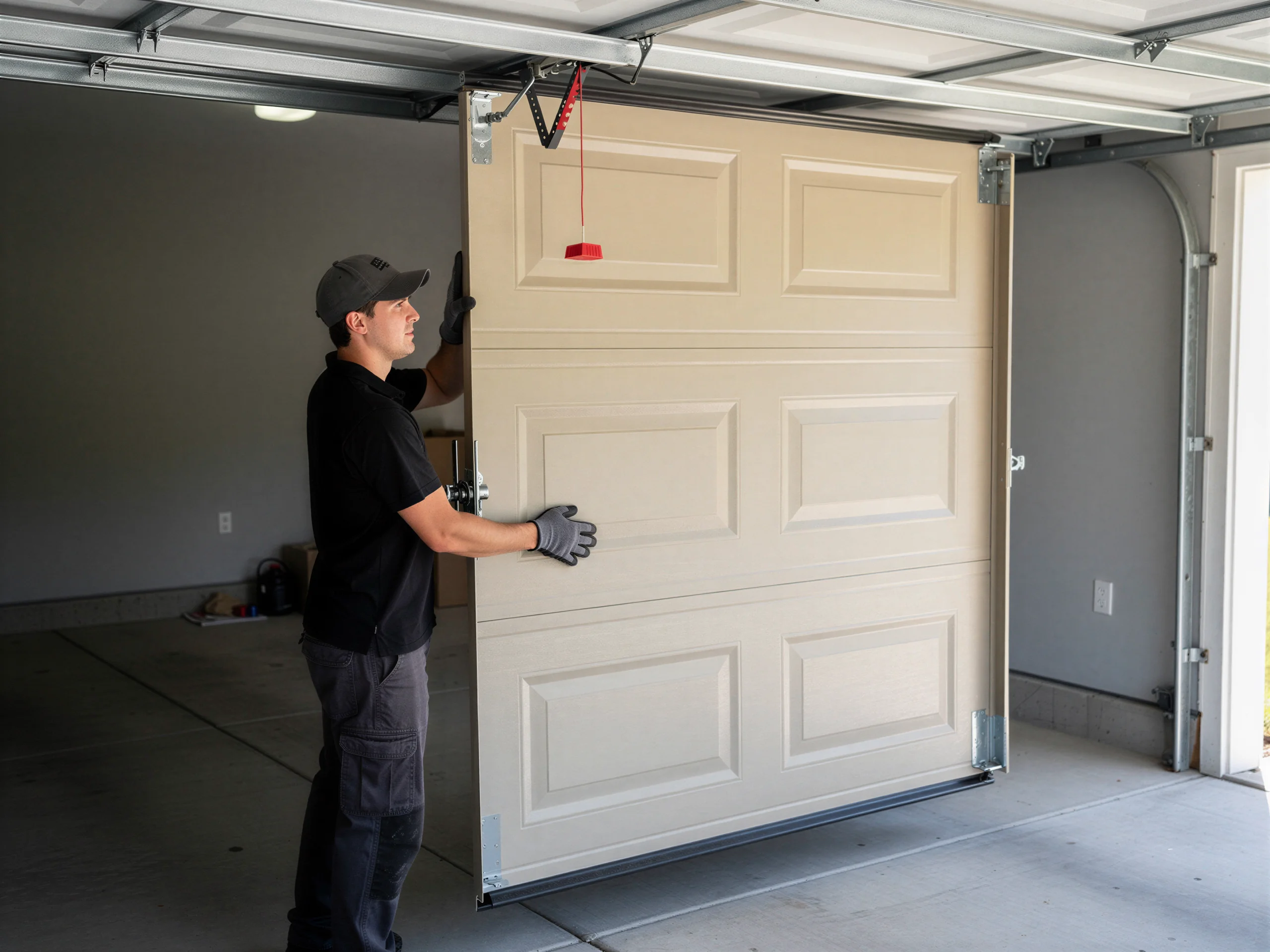
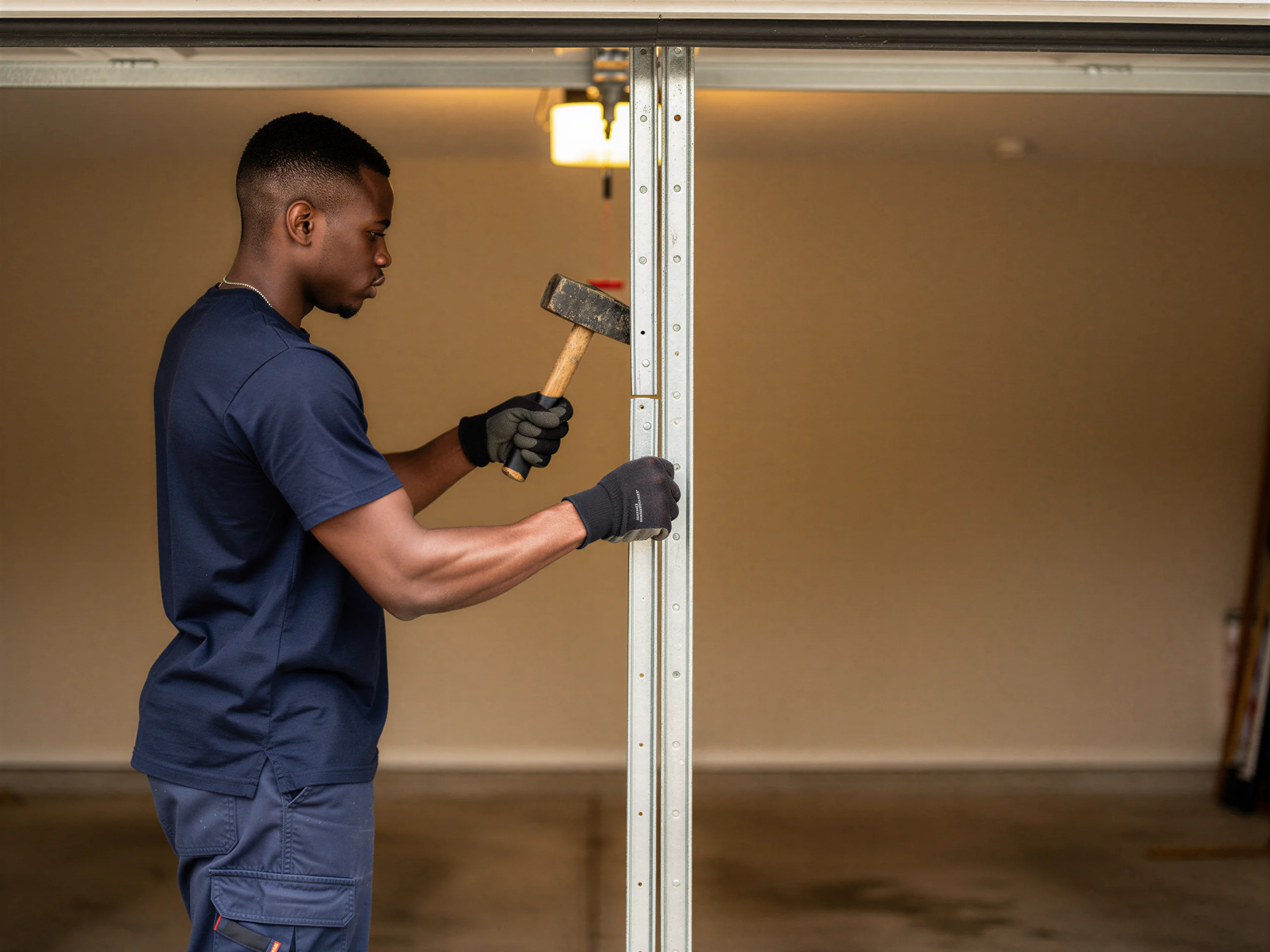
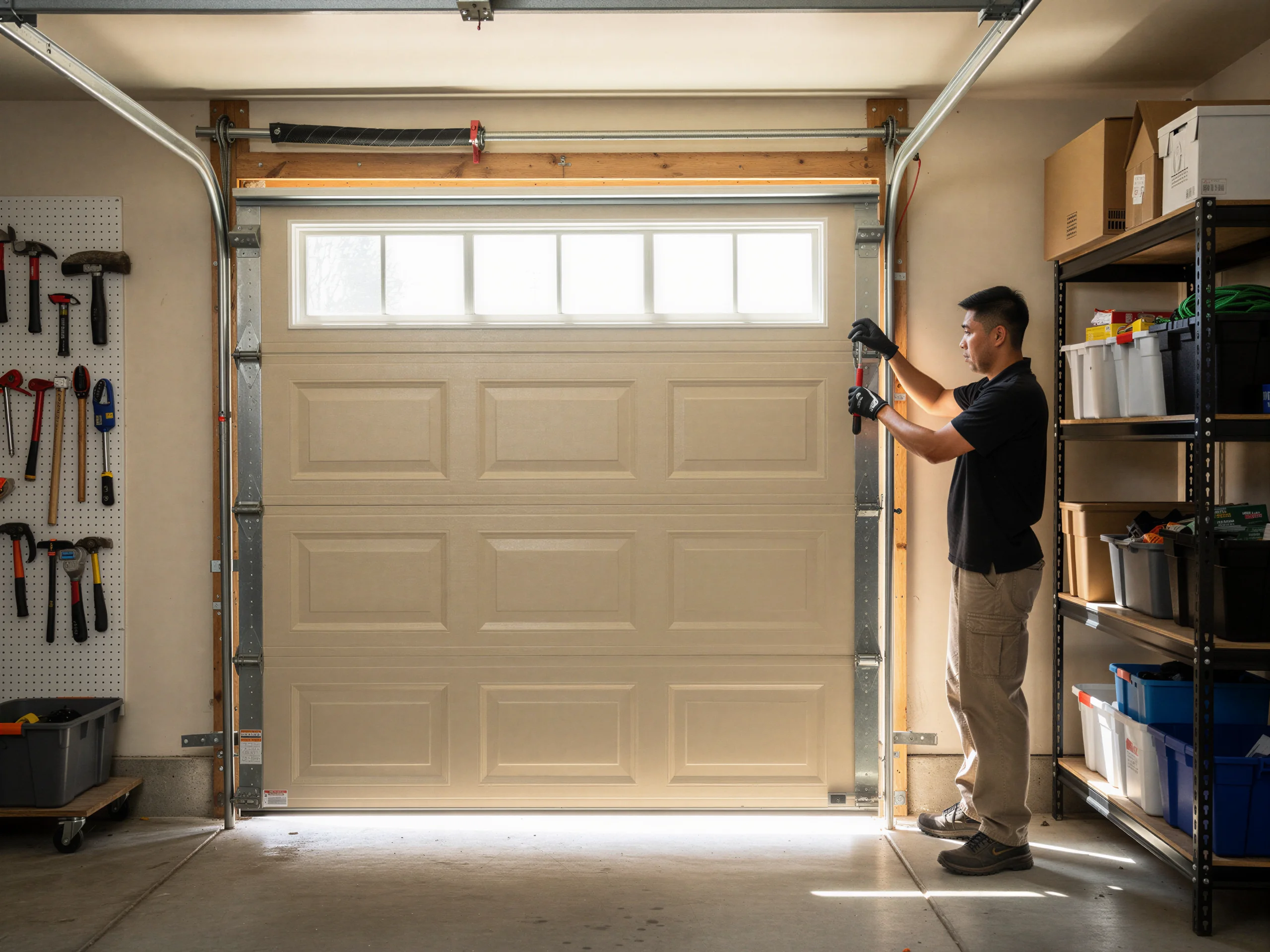
If the panel is a standard width and the door is a common model, we order a matching section and swap it in place, re-securing hinges and resetting the track alignment.
If the style is no longer made - which happens often with doors from the 80s and 90s housing boom here - we look at a close color and panel-depth match first, since full-door color matching across a faded original isn't realistic after a few decades of sun and salt-treated winter roads.
When a single panel can't be matched well enough to look right or seal right, we'll say that plainly rather than force a mismatched fix. That's the honest limit of panel replacement: it's a targeted repair, not a way to make an old door look new. Sometimes the math points to replacing the whole door instead, and we'll walk you through that math rather than just sell you the easier line item.
Warning signs
Panel failure here usually starts small: a crease from a car bumper or a basketball, a crack along a seam after a cold snap, or a bowed section where the foam core has pulled away from the steel skin.
On the older end of the area's housing stock - doors original to builds from the 1960s through the 1980s - you'll see rust-through at the bottom panel first, since that's the section closest to runoff and road salt.
On the newer end, from the 1990s and 2000s builds, the complaint is more often a cracked panel skin with the foam insulation still intact behind it, which is a cosmetic fix more than a structural one.
Either way, the tell is usually visual before it's functional - the door still opens and closes fine, it just looks wrong, until the crack works its way to an edge and the panel stops holding its shape under the opener's pull. If you're seeing daylight through a seam that used to be flush, that's past cosmetic and into a repair that shouldn't wait for next spring.
Local causes
Most homes across this service area went up between 1962 and 2007, with the median sitting around 1982 - a long run of steel sectional doors with foam cores that were standard for that era. That construction holds up fine in mild weather. It doesn't hold up as well under the cold-and-severe winter swings this area gets, where repeated freeze-thaw cycles work at the bond between the steel skin and the foam backing until the skin pulls loose or cracks along a seam. Add decades of expansion and contraction on panels that were never built to be replaced piecemeal, and a dent that would've been cosmetic on a newer composite door turns into a crack that spreads. Across the 109,568 households and 59,424 owner-occupied houses in this service area, a large share share that same age band and the same panel design, which is part of why panel sourcing is such a consistent part of this job - we're not chasing one-off styles, we're chasing the same handful of discontinued profiles over and over. It's less about any one storm and more about thirty or forty winters doing their slow work on a door nobody's touched since it went up.
Questions
Often, yes - if the style is still made or close enough to match. Doors built in the 80s and 90s, which make up a lot of the housing stock here, sometimes have discontinued panel profiles, and in those cases a single-panel swap may not match well enough to be worth it. We'll tell you straight if that's the case before ordering anything.
This area sits in a cold-to-severe climate band, and older foam-core panels go through years of freeze-thaw cycling that weakens the bond between the steel skin and the insulation behind it. A dent that would stay cosmetic in a mild climate can turn into a cracked seam here after enough winters.
Usually, if the panel matches. If it doesn't - common on older, discontinued styles - the cost of hunting a matching panel plus labor can get close to replacing the whole door, and at that point we'll walk you through both options rather than push the repair just because it's listed as one.
A bent panel usually still lets the door move smoothly; a bent track makes the door bind, scrape, or stick partway through its cycle. If you've got both a dented panel and a door that's not moving right, the track likely took the hit too and needs checking before we touch the panel.
Explore more
Ready when you are
Waldorf Garage Door Pros repairs and installs garage doors, springs and openers in Waldorf, MD and the surrounding area.