
Shudder at one spot
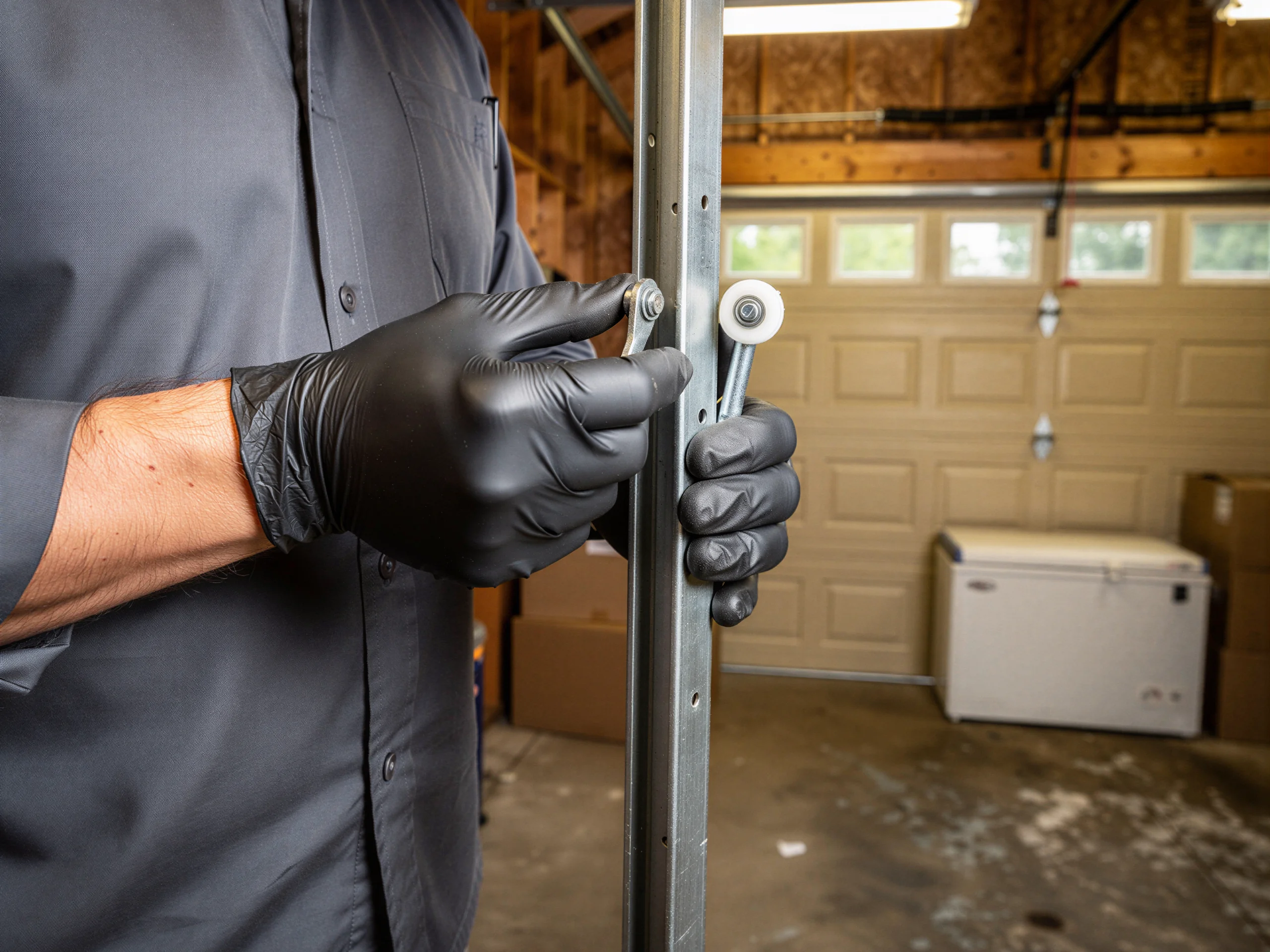
Next comes a door that shudders or jerks at the same point in its travel every time, because one roller has flat-spotted or cracked and is no longer rolling smooth through the track.
Waldorf, MD
Steel rollers from Waldorf's 1980s-90s housing wave crack in cold winters. Waldorf Garage Door Pros replaces worn rollers on the stock built 1962-2007.
Downtime
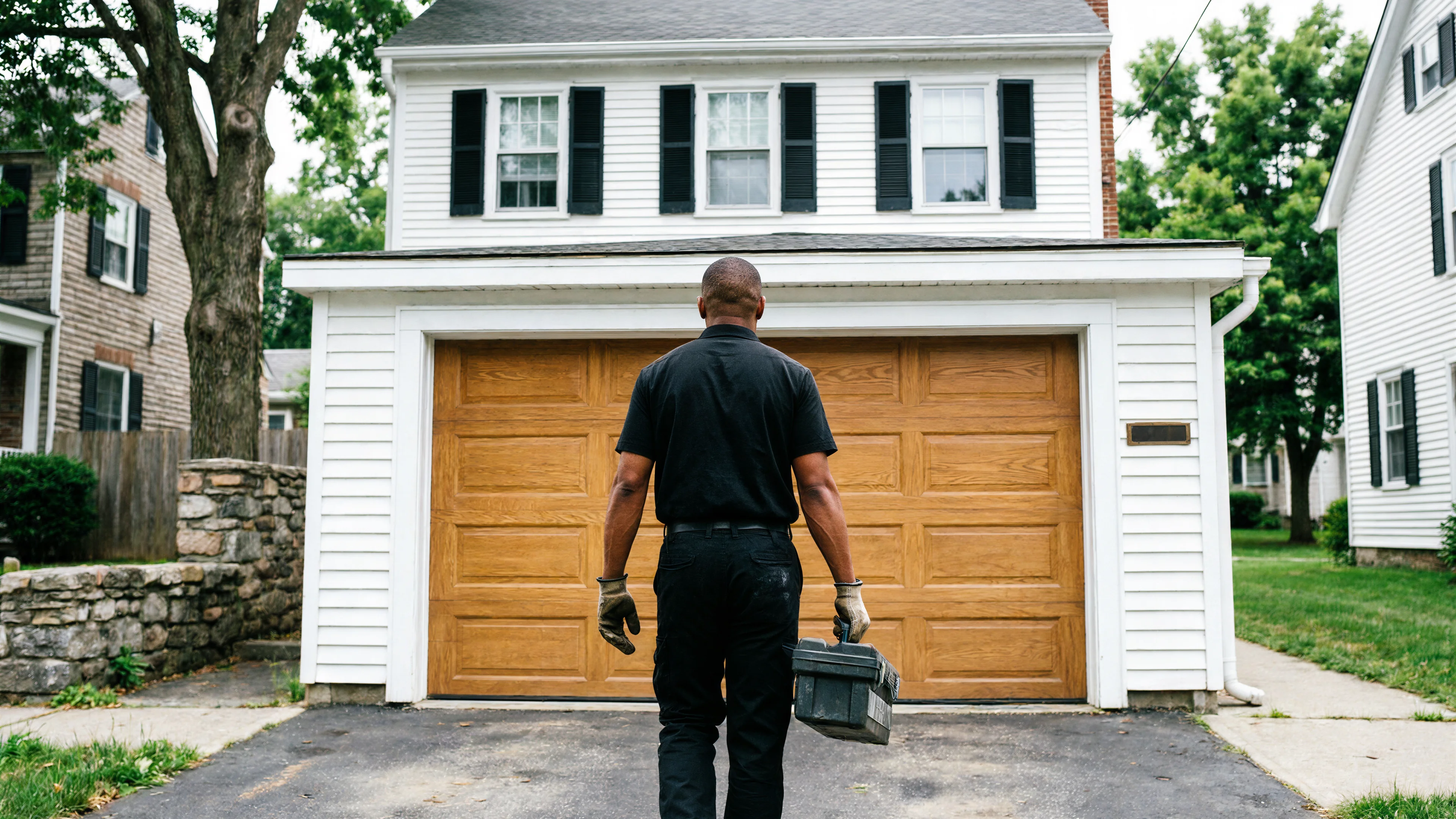
A roller job is not a day-long project. Once we're on site, swapping a full set of rollers on a double door usually keeps the door down for an hour or two, not a day - you're not waiting on a custom panel order or a motor. The slower part is scheduling, not the repair itself. If a roller has already jumped the track and bent it, or if the stem has snapped off inside the hinge, that adds time because we're straightening or replacing track sections too, and track stock varies by width and gauge. The one thing that stretches a job out is a door that's been run on a broken roller for weeks - the track edges wear into a shape that won't hold a new roller straight, and at that point you're looking at a track swap alongside the rollers, which is a longer job than either one alone. We won't know which situation you're in until we see the track wear in person.
Our process
We pull the old rollers, check the track for the scoring and widening that bad rollers leave behind, and set new rollers to the stem length and wheel diameter the door actually needs - not a universal size that's close enough.
On houses from the 1980s and 90s stock common across this area, the original hardware is almost always steel 7-ball rollers running in galvanized track, and we'll tell you honestly when a sealed-bearing nylon roller is worth the upgrade versus when matching the original steel is the cheaper, sensible call.
We also check the hinges those rollers sit in, since a worn hinge hole will chew through a brand-new roller just as fast as the old track did.
One limitation: if the track itself is bent beyond a certain point, we don't try to hammer it straight and call it fixed - that's a track replacement, not a roller job, and we'll say so before we start rather than after.
Warning signs
The first sign is usually noise - a grinding or clicking that gets louder as the door opens, coming from one spot rather than the whole run.
Next comes a door that shudders or jerks at the same point in its travel every time, because one roller has flat-spotted or cracked and is no longer rolling smooth through the track.
Left alone, a cracked roller eventually lets the door tilt slightly off its track on that side, which puts extra strain on the opener and the cables next to it.
By the time a roller has actually jumped the track, the door usually won't move at all, or it moves a few inches and stops hard. None of this happens overnight - it's gradual wear that homeowners notice for weeks before calling, usually once the sound goes from occasional to constant.
Local causes
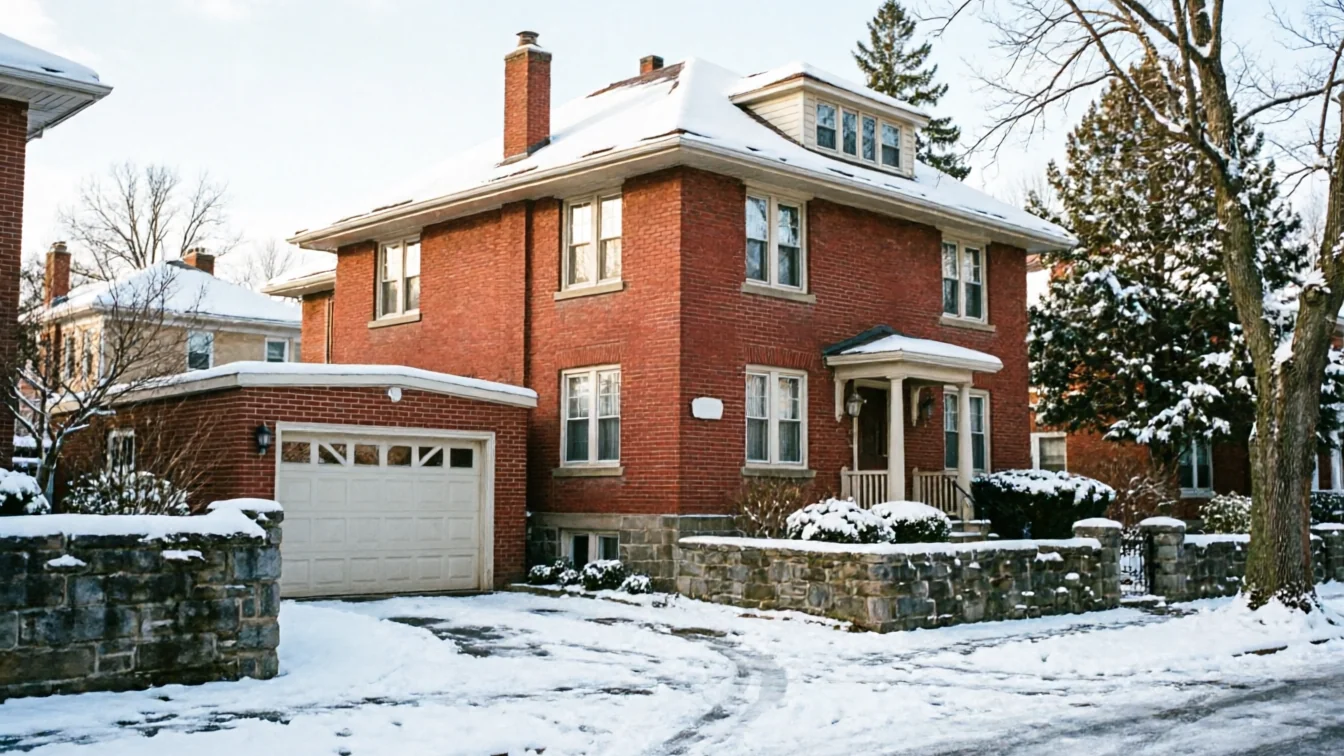
Housing in this service area was mostly built between 1962 and 2007, with the bulk of it dating to the 1980s and 90s, and that generation of garage doors came standard with steel rollers on steel stems - not the sealed nylon rollers you'd spec on a new install today. Steel doesn't flex the way nylon does, and in a cold-and-severe climate band like this one, repeated freeze-thaw cycles make steel stems brittle at the weld point over enough winters. Add thirty-plus years of daily use on the original hardware and you get the predictable failure: a stem snaps, or a wheel wears oval instead of round. This isn't a defect in any one door - it's just what happens to steel-on-steel hardware from that building era once it's logged enough cold winters and enough open-close cycles.
Questions
Cold makes steel brittle at stress points, and this area sits in a cold-and-severe climate band with real freeze-thaw cycles. A roller stem that's been flexing fine for twenty summers can crack on a cold January morning when the metal has less give. It's the accumulated cycles plus the cold snap that finally breaks it, not the cold alone.
You can, but if your door is original to a house from the 1980s or 90s, the rest of the rollers are the same age and likely close behind. We'll point out which ones are visibly worn versus which are fine, and let you decide - we're not going to tell you to replace a set of six if two are still sound.
Usually, if rollers are the actual source of the noise. But noise can also come from worn hinges, a dry track, or loose hardware, so we check those at the same time. Replacing rollers on a door where the real problem is a stripped hinge won't quiet it down.
Explore more
Ready when you are
Waldorf Garage Door Pros repairs and installs garage doors, springs and openers in Waldorf, MD and the surrounding area.